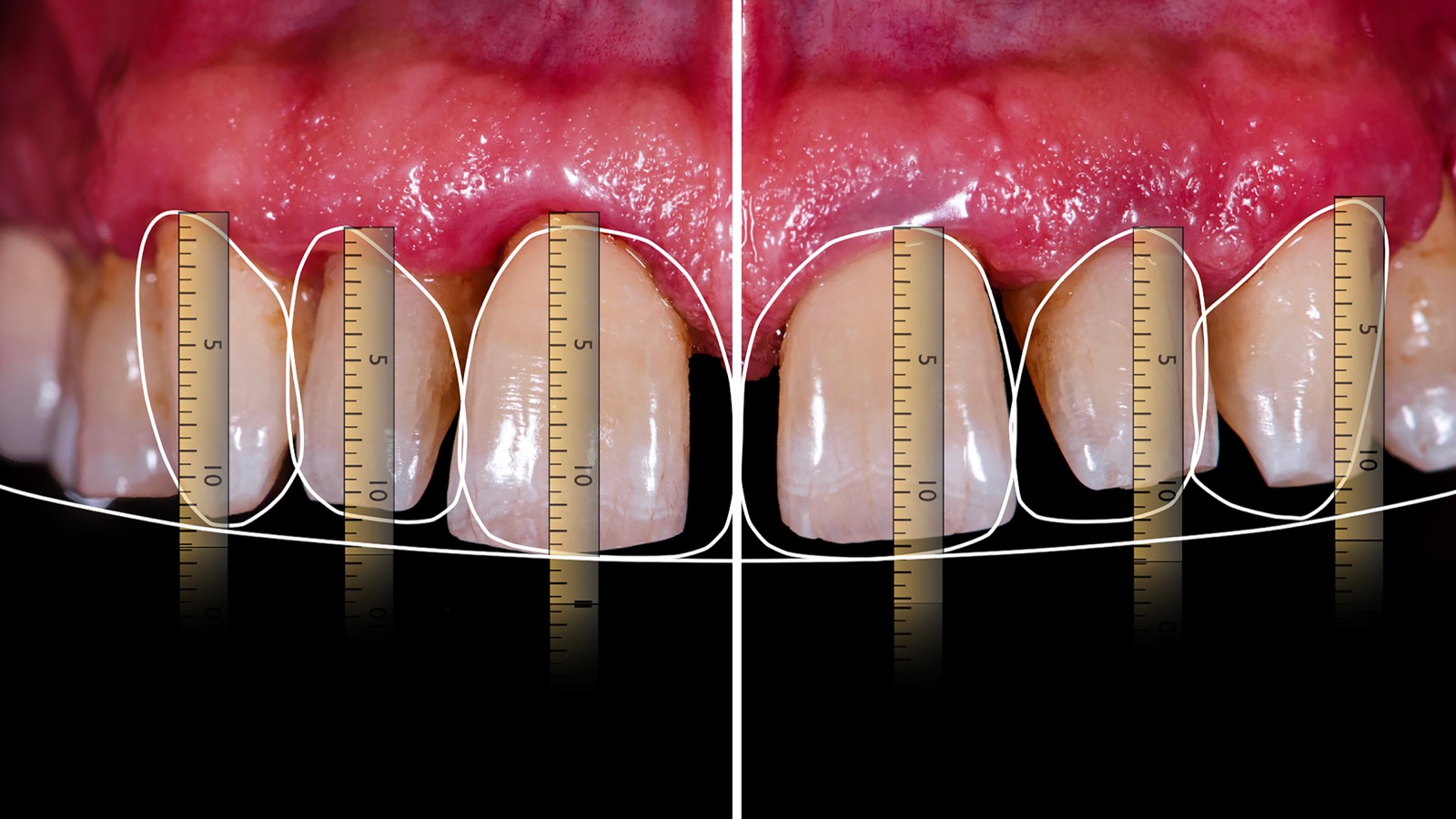
There is a specific moment in aesthetic dentistry that determines whether a patient says yes to treatment or walks away to “think about it” — and it almost always happens before any clinical work begins. It's the moment a patient sees what their new smile could actually look like. Digital smile design has turned that moment from a verbal promise into a visual certainty, and in doing so, has become one of the most commercially and clinically important skills in modern aesthetic dentistry.
What Digital Smile Design Actually Does
At its core, digital smile design is a structured, technology-assisted process for planning aesthetic treatment before any irreversible step is taken. It allows a dentist to analyse facial and dental proportions, design an ideal smile outcome digitally, simulate that outcome visually, and walk the patient through the plan using images rather than description alone.
This isn't cosmetic guesswork dressed up in software. Done properly, digital smile design is grounded in established principles of facial symmetry, tooth proportion, and smile aesthetics — the software is simply the tool that makes those principles precise, visual, and repeatable.
Why This Skill Has Become Essential, Not Optional
Patient expectations in aesthetic dentistry have shifted permanently. Patients researching veneers, smile makeovers, or aesthetic restorations increasingly expect to see a preview before committing — and dentists who can't offer that are often competing at a disadvantage against those who can, regardless of clinical skill level.
Beyond patient expectation, digital smile design delivers real clinical advantages:
- Sharper communication. Patients understand a visual mock-up instantly, in a way that verbal treatment descriptions rarely achieve.
- Higher case acceptance. Seeing a credible outcome in advance measurably reduces hesitation and “thinking it over” delays.
- Fewer clinical surprises. Planning the outcome digitally before treatment reduces the chance of misaligned expectations between dentist and patient once treatment is complete.
- More predictable aesthetic results. Working from a planned design rather than improvising chairside tends to produce more consistent outcomes case after case.
The Core Skills Behind Genuine Competency
Digital smile design is often mistaken for “just learning the software,” but real competency rests on five distinct skill areas:
- Facial analysis. Understanding facial midline, symmetry, lip dynamics, and how these interact with the planned smile — the foundation every design decision sits on top of.
- Smile design principles. Tooth proportion, golden proportion concepts, incisal edge position, and gingival display — the aesthetic rules that guide what makes a smile look natural rather than artificial.
- Software navigation. Practical fluency with the digital tools used to overlay, adjust, and refine a smile design on a patient's own photographs or scans.
- Treatment simulation. Producing a credible, accurate before-and-after visualisation that sets realistic expectations rather than an exaggerated, unachievable preview.
- Integration with CAD/CAM dentistry. Knowing how a digital smile design translates into an actual CAD model and, ultimately, a manufactured restoration — without this link, the design remains a presentation tool rather than a clinical one.
Where Digital Smile Design Connects to the Rest of the Digital Workflow
Digital smile design rarely operates in isolation. The typical workflow runs from photographic and scan capture, through digital design, into a CAD model, and finally into CAM-based manufacturing of the actual restoration. This means the quality of a smile design is only as good as the photography and scanning that feeds into it — which is exactly why photography, scanning fundamentals, and smile design are best learned as a connected sequence rather than isolated skills.
Who Benefits Most From This Training
Digital smile design training is particularly valuable for:
- General dentists looking to grow their aesthetic and cosmetic case volume
- Prosthodontists managing complex restorative-aesthetic cases
- Dentists who want to improve case acceptance rates without changing their clinical technique
- Clinicians aiming to differentiate their practice in an increasingly aesthetics-driven market
Final Thought
Digital smile design has moved from a novelty offered by a handful of specialist clinics to a baseline expectation in aesthetic dentistry. The dentists building real competency in facial analysis, design principles, and software fluency — not just owning the software — are the ones converting consultations into accepted treatment plans, and treatment plans into genuinely predictable, patient-satisfying outcomes.
Interested in Aesthetic Dentistry?
Explore ACAD's accredited programmes and take the next step in your clinical development.