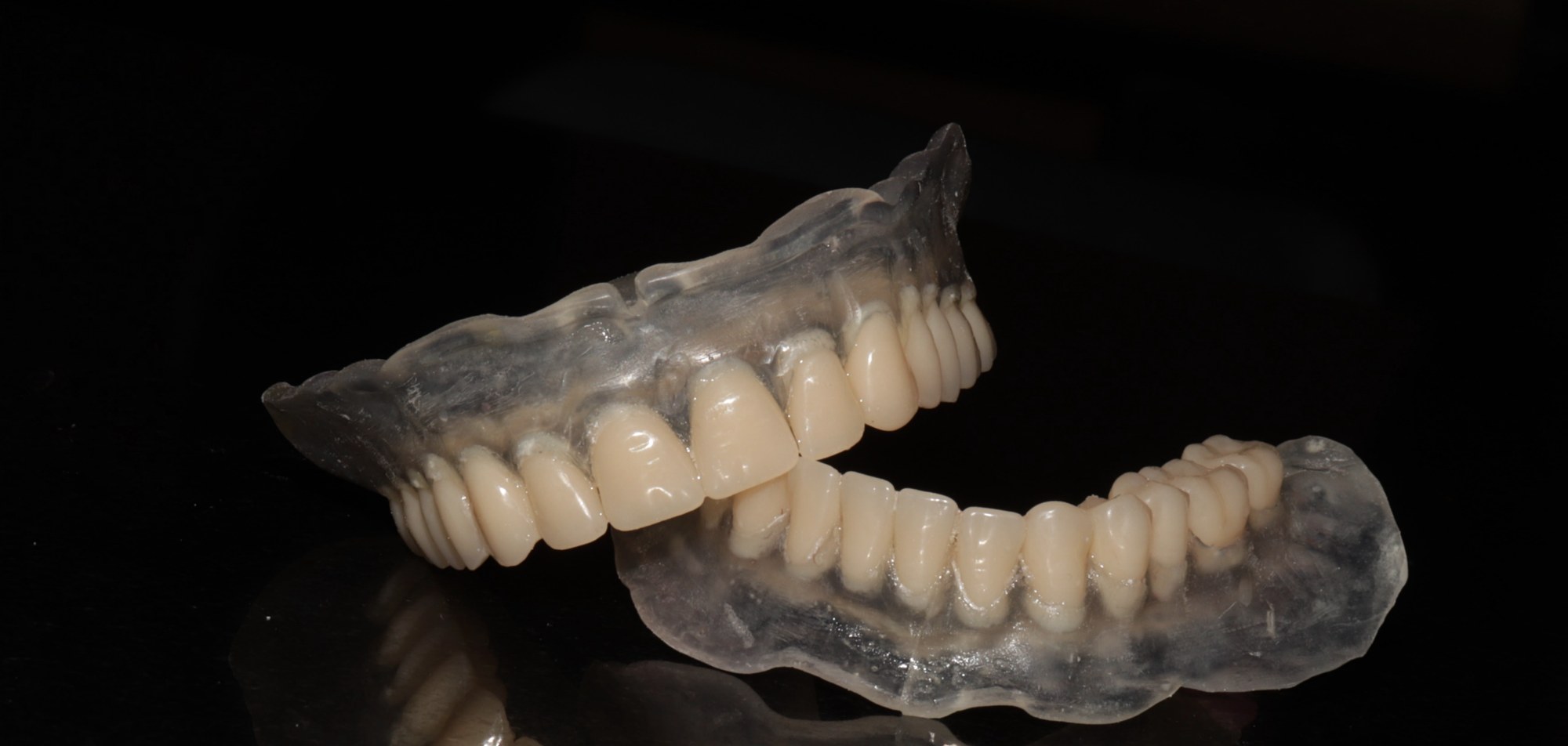
Complete denture fabrication has always been considered as much an art as a science, relying heavily on clinical experience, manual dexterity, and repeated patient visits to get occlusion and fit right. Digital denture workflows have not eliminated that skill requirement, but they have fundamentally changed how consistently that skill can be reproduced in technical lab steps, and how quickly. For dentists across the UAE weighing whether to invest in a digital denture workflow, the decision comes down to understanding exactly what changes, and what does not.
The conversation around digital dentures often gets reduced to a simple "which is better" debate, but that framing misses the point. The more useful question is which workflow fits which patient, and for many practices, the real answer is having both available rather than replacing one with the other entirely.
The Conventional Workflow, Step by Step
The conventional denture pathway follows a well-established sequence: primary impressions to capture the general anatomy, a custom tray fabricated from those impressions, secondary impressions for a more accurate final record, jaw relation records to capture the patient's bite and vertical dimension, a wax try-in appointment to confirm aesthetics and occlusion with the patient before finalising, and finally processing and delivery.
This pathway has produced excellent, long-lasting results for decades in the hands of a skilled clinician and technician, and the wax try-in step in particular allows for genuine back-and-forth adjustment with the patient before anything is finalised. Its main limitations are the number of clinical visits required — typically five or more — the cumulative risk of small errors compounding at each manual step, and the difficulty of replicating a denture exactly if it is lost, broken, or simply worn out years later.
The Digital Workflow, Step by Step
Digital denture systems use intraoral scanning, or scanning of conventional impressions on a desktop scanner, combined with CAD software to design the denture base and tooth arrangement digitally. The software includes libraries of tooth shapes and shades, and a virtual articulator to simulate occlusion and jaw movement before any physical try-in happens.
Once the design is approved, the denture is produced either by milling from a solid disc of denture-base material, or by 3D printing, depending on the system used. This compresses the number of clinical appointments, often to two or three visits total, and creates a digital file of the final denture design that can be recalled and used to mill an identical replacement at any point in the future, without needing to repeat the impression process from scratch.
What Actually Changes in Accuracy and Fit
Milled dentures, produced from a single dense block of material, avoid much of the processing shrinkage and warpage that can occur during traditional heat-cured acrylic processing, where the material cures and can distort slightly as it cools. This tends to translate into more consistent fit straight off the mill, with less chairside adjustment needed at delivery.
That said, accuracy in a digital workflow still depends heavily on the quality of the initial scan and the accuracy of the jaw relation records captured digitally. A poor scan produces a poor digital denture just as reliably as a poor impression produces a poor conventional one — digital does not mean immune to error, it means the errors show up earlier and are easier to catch before final production.
- Fewer clinical appointments, which matters for both patient convenience and chair-time economics
- A saved digital file, enabling fast, accurate remakes if a denture is lost or fractured
- Reduced processing shrinkage and warpage compared to heat-cured acrylic
- Easier duplication for immediate dentures and transitional restorations
Digital workflows do not remove the need for clinical judgement in denture fabrication. They simply make excellent judgement easier to execute consistently.
The Patient Experience Difference
For patients, the most noticeable difference is the number of visits and the overall timeline. Fewer appointments matter significantly for elderly patients, those travelling from further afield, or patients with limited mobility — all common considerations in day-to-day UAE practice. The saved digital file also gives patients genuine peace of mind: a lost or damaged denture, a real and disruptive problem particularly for patients who rely on it as their only set, can potentially be remilled quickly from the stored design rather than requiring a full restart of the impression process.
Where Conventional Technique Still Holds Its Ground
Digital denture systems are not universally superior in every case. Patients with significantly resorbed ridges, where the denture-bearing area has changed substantially over time, unusual anatomy, variations in maxillomandibular relationship, or complex neuromuscular considerations affecting jaw position and bite registration, still often benefit from the tactile feedback and iterative try-in process that conventional techniques allow.
The wax try-in appointment in particular gives both clinician and patient a genuine opportunity to adjust tooth position, smile line, and vertical dimension in real time, something a purely digital preview, however good the software, doesn't fully replicate for every patient. Highly aesthetically demanding cases also benefit from this hands-on iteration.
Cost and Practice Investment Considerations
Adopting a digital denture workflow is a major investment in an intraoral scanner, if one isn't already in use, design software licensing, and either an in-house mill or collaboration with a digital denture fabrication lab. For practices already using intraoral scanning for other digital dentistry work, the incremental cost of adding dentures to that workflow is considerably lower than starting from scratch.
The return on that investment tends to come from efficiency — fewer chairside adjustment appointments, faster turnaround, and the ability to offer a fast, reliable remake service — rather than from charging significantly more per denture. Practices considering the switch must weigh current denture case volume against the upfront cost before committing.
What This Means for Your Practice
For practices across the UAE and GCC, adding a digital denture workflow is less about replacing conventional technique and more about expanding the range of cases you can handle efficiently, particularly for patients seeking fewer visits or a reliable backup denture on file. The clinical decision-making — tooth selection, occlusal scheme, and try-in evaluation — remains squarely the dentist's responsibility either way. The most effective clinicians are the ones who can move fluidly between both approaches, choosing the right workflow for the case in front of them.
Ready to Add Digital Dentures to Your Practice?
ACAD's Digital Dentures course walks you through the complete digital workflow, from scanning to design to delivery, with real case examples. CPD Standards Office UK accredited.