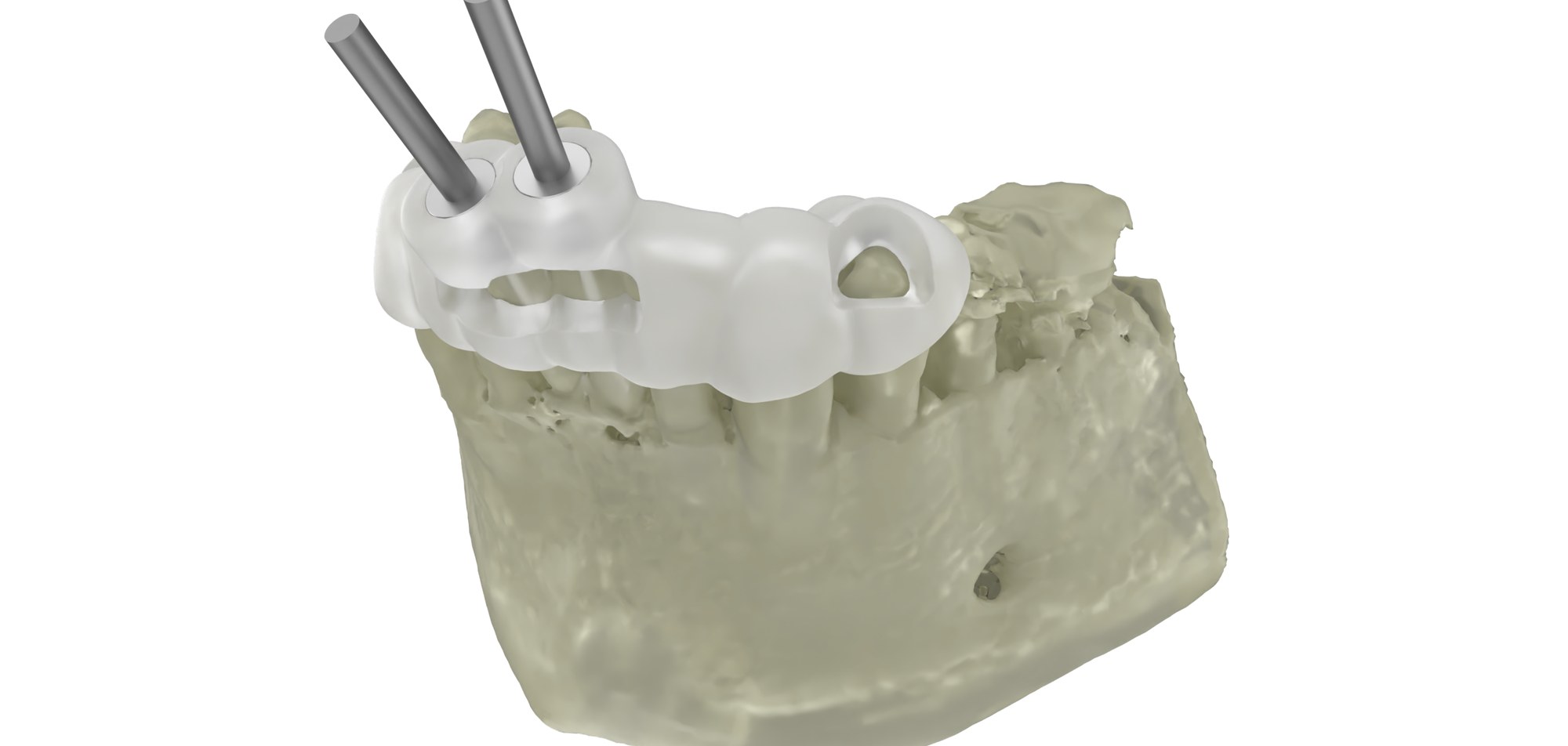
Ask any experienced endodontist about the hardest part of a root canal treatment, and most will point not to the obturation, not to the working length, but to the very first step: finding the canal. A missed or off-centred access cavity is still one of the leading causes of procedural complications, unnecessary loss of tooth structure, and referrals that could have been avoided altogether. Guided endodontics was developed to solve exactly this problem, and it is quickly becoming one of the most talked-about additions to the modern dental toolkit across the UAE and the wider GCC.
For general dentists and specialists alike, guided endodontics is no longer a novelty reserved for academic case reports. It is a practical, CBCT-driven workflow that is changing how clinicians approach calcified canals, pulp canal obliteration, and cases where conventional access carries a high risk of perforation. What used to mean an automatic referral is increasingly becoming a case a well-trained clinician can manage confidently in-house.
The Problem With Traditional Access Cavity Preparation
Traditional access cavity preparation relies almost entirely on the clinician's mental map of the tooth, built from a 2D periapical radiograph and years of anatomical training. That works well in straightforward cases with normal pulp chamber anatomy and clear canal orifices. But in teeth with calcified canals, unusual root curvatures, or previous restorative work that has altered the crown anatomy, this mental map becomes unreliable, and small deviations in drill angulation can lead to significant complications.
The risk compounds with aged dentition. Pulp canal obliteration, a natural response to trauma, deep caries, or restorative treatment over time, can make a canal orifice that was once obvious almost invisible on a standard radiograph. Attempting to locate it freehand often results in excessive removal of dentine in the search, weakening the remaining tooth structure before the canal itself has been touched.
Perforation is the complication clinicians fear most in these cases, and for good reason. A lateral or furcal perforation during access can significantly worsen the prognosis of an otherwise treatable tooth, sometimes turning a routine procedure into a case requiring surgical intervention or extraction.
How Guided Endodontics Actually Works
Guided endodontic therapy closes that gap by combining CBCT imaging with intraoral scanning to build a precise 3D model of the tooth and its canal system. The CBCT dataset captures the internal anatomy, the position, curvature, and calcification of the canal, while the intraoral scan captures the external surface of the tooth and surrounding dentition with high accuracy.
These two datasets are merged in specialised planning software, allowing the clinician to visualise the ideal access trajectory from the occlusal surface directly to the canal orifice, avoiding critical structures and unnecessary removal of tooth structure along the way. Once the trajectory is planned, a custom drill guide, referencing the surrounding teeth for stability, is designed digitally and 3D-printed, often in-house or through a partner lab within a day or two.
At the chairside appointment, this guide is seated over the adjacent teeth and used to direct a guided drill along the pre-planned path, preparing the access cavity with sub-millimetre accuracy. The result is a straight, predictable line to the canal orifice, even in teeth where freehand access would have meant significant guesswork.
Where the Clinical Impact Is Greatest
Guided endodontics is not necessary for every root canal treatment, and using it on a straightforward, uncalcified case adds cost and time without meaningful benefit. It is highly beneficial in a specific subset of cases where conventional access is genuinely difficult or is likely to lead to a poor outcome.
- Calcified or obliterated canals that are difficult or impossible to locate conventionally
- Teeth with anatomical anomalies, dens invaginatus, or unusual root curvature
- Cases with a high risk of perforation due to prior restorations, posts, or crowns
- Retreatment cases where canal location has become significantly altered by previous work
- Situations demanding maximum conservation of remaining tooth structure, such as thin-walled teeth planned for a crown
Comparing Guided Access to Freehand Access
The difference between guided and freehand access becomes most obvious in calcified canals. Freehand negotiation of a calcified canal can take significant chair time, involves repeated radiographs to check trajectory, and carries a real risk of creating a false path or ledge before the true canal is even located. Guided access, by contrast, follows a pre-validated trajectory, meaning the clinician spends less time searching and more time treating.
This does not eliminate the need for clinical skill once the canal is located. Subsequent shaping, cleaning and obturation still demand the same level of clinical expertise as any other case.
Guided endodontics does not replace clinical judgement. It removes the guesswork from the one step where guesswork is least forgivable.
Limitations and Practical Considerations
Guided endodontics does come with real constraints worth understanding before recommending it to every patient. It requires access to a CBCT unit and an intraoral scanner, along with planning software and either an in-house 3D printer or a reliable partner lab for guide fabrication. The additional planning and fabrication time also means the workflow is generally better suited to a two-visit approach rather than same-day treatment, unless the guide can be produced quickly in-house.
There is also a genuine learning curve. Interpreting CBCT scans accurately, planning a safe trajectory, and executing the guided drilling technique chairside are skills that build with supervised practice, not something to attempt for the first time on a complex live case.
Developing Skill the Right Way
Understanding CBCT interpretation, guide design software, and the hands-on execution of guided access preparation requires structured, supervised training rather than trial and error on live patients. This is exactly why ACAD has developed a dedicated hands-on guided endodontics workshop, taught alongside our root canal treatment course. The programme is designed to take clinicians from CBCT case selection through guide planning to hands-on execution, with CPD Standards Office UK accreditation recognised across the UAE and GCC.
What This Means for Your Practice
For clinicians across the UAE and GCC, the appeal is straightforward. Guided endodontics reduces chair time on complex cases, lowers the risk of perforation-related complications, and gives patients a more predictable, less invasive experience. It also opens the door to confidently treating cases that might otherwise have been referred out, which has a direct impact on practice growth, patient retention, and the range of cases a general practice can comfortably handle in-house.
Ready to Add Guided Endodontics to Your Skillset?
Join ACAD's hands-on Guided Endodontics workshop and learn the complete CBCT-to-chairside workflow under expert supervision.